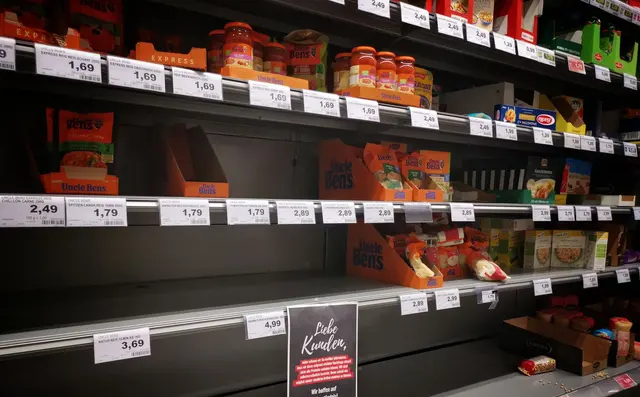
Retail in the Netherlands runs on shelves, not just servers
A Dutch retailer with three or thirty physical stores faces a problem an online-only seller never does: stock that is in the wrong building. You can have a winter coat selling out in Utrecht while four sit untouched in a Groningen branch, and your point-of-sale reports will quietly call both "in stock". That single mismatch (right product, wrong location) drives most of the margin a store chain loses in a season. AI for retail in the Netherlands is not a chatbot bolted to a homepage; it is the modelling that decides what goes on which shelf, when staff are on the floor, and how a customer who browsed in-store on Saturday gets recognised when they finish the purchase online on Sunday.
Crux Digits builds that modelling layer for Dutch and European retailers, practical detailhandel AI aimed at availability and margin, not slideware. We are a boutique, senior-led AI consultancy, the people who scope the work stay on it through production, and you own the system at the end rather than renting it back from us. For a mid-sized retail chain, that ownership is the difference between a forecasting model you can tune as your assortment changes and a black box that drifts the moment your buyers shift suppliers.
Demand forecasting that respects how stores actually behave
The rest of this page covers the core idea: predict sales per product so you stop guessing. The harder, more valuable version for store networks is forecasting per product, per location, per day, and feeding that into how you distribute and replenish. A national average is useless to a store manager. What they need is "send eleven units of this SKU to this branch before Thursday, that catchment buys it and the weekend forecast is warm."
Real Dutch retail demand is messy in specific, learnable ways. It bends around school holidays (which differ by region. Noord, Midden, Zuid), paydays, Dutch weather swings that empty a garden centre one week and flood it the next, and local events. A model that ignores these over-orders on calm weeks and stocks out the moment demand spikes. We build forecasting that ingests your historical sales, promotional calendar, weather signals and regional holiday data, then quantifies the uncertainty instead of pretending the future is a single number. Knowing a SKU will sell "between 40 and 70 units, 90% confident" lets a buyer set safety stock deliberately rather than padding everything and tying up cash.
- Less working capital frozen in stock. Tighter forecasts let you hold less safety stock at the same service level. Retail benchmarks commonly put 20–30% of inventory value in slow or dead stock; trimming that releases cash directly back into the business.
- Fewer lost sales. A stock-out is not a delayed sale, it is usually a sale that walks to a competitor and a customer who learns your shelf is unreliable. Forecasting at location level is the main lever to push availability up without overstocking everywhere.
- Smarter markdowns. The same models flag which lines are tracking below plan early enough to act with a small markdown in one region, instead of a chain-wide fire sale at end of season.
This sits on top of solid data engineering. POS exports, ERP stock tables and supplier lead times pulled into one clean, daily-refreshed dataset. Most retailers already hold all of this; it just lives in four systems that never talk. Joining it is usually the first month of any real machine-learning project, and that work keeps paying off long after the first model ships.
Inventory optimisation and allocation across the network
Forecasting tells you what will sell. Inventory optimisation decides what to do about it: how much to order, when, and crucially how to move stock you already own between stores so it ends up where it will sell. For a chain, inter-store transfers are an under-used lever, moving the Groningen coats to Utrecht costs a fraction of a new purchase order and clears stock that would otherwise be marked down.
What we actually build
- Automated replenishment suggestions per store and SKU, tuned to each location's sales rate, shelf capacity and supplier lead time, so a buyer reviews and approves rather than calculating from scratch.
- Allocation logic for new-season and promotional stock, splitting a delivery across branches by expected local demand instead of an even share that strands inventory in the wrong shops.
- Re-balancing alerts that surface profitable inter-store transfers before a line goes to clearance.
- Slow-mover and end-of-life detection, so ageing stock is acted on while a modest markdown still recovers margin.
The point is not to replace your buyers. It is to give them a ranked, explainable list every morning so their judgement goes to the decisions that matter, not to copying numbers between spreadsheets. Under the EU AI Act this kind of inventory tool is low-risk, but we still build it to be auditable: every suggestion traces back to the signals behind it, which is also exactly what a buyer needs to trust it.
Omnichannel: one customer, one stock pool, one view
"Omnichannel" gets used loosely, so to be concrete: it means a customer who starts in one channel and finishes in another is treated as the same person, and your stock is visible and sellable across the whole network. We deliberately keep pure webshop topics (checkout, online merchandising, marketplace feeds) on our e-commerce page. Here the focus is the seam where physical and digital meet, because that seam is where Dutch retailers lose money and goodwill.
Where AI does real work at the seam
- Unified inventory visibility so click-and-collect and ship-from-store actually work. The model decides which location should fulfil an online order (balancing distance, stock health and the risk of stripping a shelf that a walk-in customer wants) instead of a naive "nearest store" rule that creates its own stock-outs.
- Customer identity resolution that links loyalty card, in-store purchase and online account into one profile, so recommendations and offers reflect everything someone buys, not just their last web session.
- Next-best-offer across channels, where the model knows a customer browsed a product in store and can follow up sensibly online, without becoming creepy or breaching consent.
All of this runs under the AVG (GDPR). We build identity resolution and personalisation on a lawful basis with consent handled properly, data minimised, and profiles you can explain and delete on request. A boutique partner who has shipped 13 case studies (several involving sensitive data in regulated sectors like healthcare) treats this as the default, not a compliance bolt-on after launch.
The physical store is the channel most retailers measure least. Online you know every click; in the shop you often know only the till total. AI closes that gap without turning a friendly Dutch high-street store into a surveillance operation.
Computer-vision and sensor models can count footfall, measure conversion (visitors versus transactions), reveal which zones and displays actually draw shoppers, and show how queue length affects walkouts. Feed that into staff rostering and you put people on the floor when customers are there, cutting the lunchtime queue that loses sales and the dead afternoon when half the team stands idle. Our computer-vision work is built privacy-first: anonymous counting, no biometric identification of shoppers, fully within EU AI Act limits, which is both the legal line and what Dutch customers expect.
Personalisation that respects the shopper
In-store personalisation, done right, is the loyalty app that shows an offer relevant to what this customer buys, the staff tablet that surfaces a returning customer's size and past purchases (with consent) so service feels genuinely informed, and assortment decisions tuned to each catchment rather than a head-office template. The outcome is a larger basket and a customer who comes back, earned through relevance, not through pestering. None of it needs the manipulative tactics that erode trust; the brands that win in Dutch retail are the ones shoppers feel are on their side.
Customer analytics that drive decisions, not dashboards
Every retailer has dashboards. Few have analytics that change what they do on Monday. The value is in turning the customer data you already hold into specific, profitable actions.
- Segmentation that's actually actionable, grouping customers by behaviour and value so marketing spend goes to the segments that respond, not a single blast to everyone on the list.
- Customer lifetime value modelling, so you know which acquisition channels bring customers who stay and spend, and stop over-investing in the ones that bring one-time bargain hunters.
- Churn and lapse prediction for loyalty programmes, flagging customers drifting away while a well-timed, relevant offer can still bring them back: far less expensive than acquiring a replacement.
- Basket and affinity analysis across channels, informing store layout, cross-sell and which products to keep near each other on the shelf and the screen.
For Dutch SMEs in particular this is where AI automation earns its keep: the recurring reports, the weekly replenishment runs, the segment refreshes that quietly eat analyst hours can run themselves, freeing your people for the judgement calls a model should never make alone.
Why a boutique partner, and what it costs
You can buy retail AI three ways. A large enterprise consultancy (think Xebia, Xomnia, Capgemini) staffs a big team and bills accordingly, sensible for a national chain, rarely for an MKB retailer. A repackaged web agency will sell you "AI" that is a thin wrapper around someone else's API, with no one who can fix the forecasting model when your assortment shifts. We are the third option: senior AI engineers who build the system properly, hand it over, and leave you owning it.
Our pricing is fixed and stated up front, excluding VAT. An AI Audit & Strategy at EUR 2,500 maps your data and ranks the use cases, usually forecasting and allocation first, because that is where the cash is. A Production-ready MVP at EUR 20,000 proves it on your own data and stores. Production launch starts from EUR 50,000, with day-rate guidance around EUR 150/hour. You see the full path and the numbers before you commit, and our delivered work (including demand forecasting and predictive projects) is on the case studies page.
If you run stores in the Utrecht region or anywhere in the country and suspect your stock is in the wrong building, that is exactly the problem we like to start with (the kind of AI for retail Netherlands-based chains actually need. Tell us where you lose sales) availability, allocation, or knowing your customer across channels, and we will map a concrete path to value, then build the part that earns its keep first.