Home / Services / Computer Vision
Service. Vision

Computer Vision

Computer vision turns cameras on a line, a yard or a road into inspection and detection that runs without a person watching. We build it as a proof of concept on your own footage first, then take it to production.

Image and video intelligence (inspection, detection, counting and recognition) tuned to your real-world environment. We turn cameras and visual data into something your business can act on, automatically.

Last updated: 14 September 2026
In short

Computer vision turns cameras on a line, a yard or a road into inspection and detection that runs without a person watching: crack detection on precast concrete, plate recognition for a low-emission zone, quality checks in food production. Built as a proof of concept on your own footage first, then production.

What it is

Let your systems see what matters

A huge amount of useful information arrives as images and video: products on a line, items on a shelf, documents, footage, scans. Computer vision turns that visual stream into structured signals: what's there, where, how many and whether something's wrong. The hard part is making it reliable in the real world, with real lighting, angles and edge cases. That's exactly what we do.

We build vision models around your actual conditions and your actual data, then deploy them where the camera already is: on the line, on the device or in the cloud.

What's included

Turning pixels into decisions

Detection & counting

Find, locate and count items, people or defects in images and video.

Quality inspection

Spot defects and deviations on the line, faster and more consistently than the eye.

Recognition & OCR

Read text and recognise products, plates or documents where you have the right to.

Video analytics

Turn live or recorded footage into events, alerts and useful metrics.

Edge & on-device

Run vision where the camera is, for speed and privacy, when the cloud isn't ideal.

Privacy by design

GDPR-aware handling of imagery, especially where people are involved.

How it works

Built and tested on your real conditions

Four fixed steps. You see something real at the end of each one.

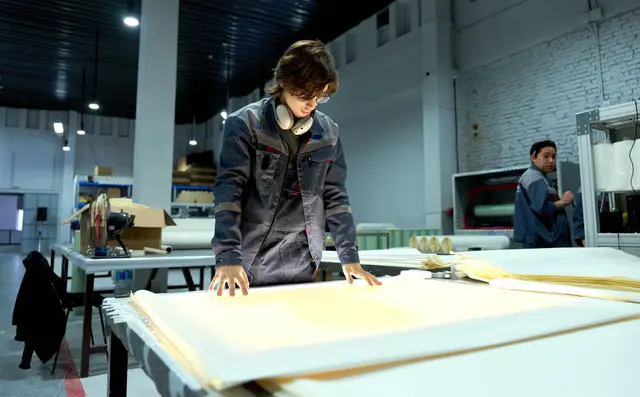
  1. A worker inspecting material on a workbench1

    Scope

    We define what to detect and what "good enough" accuracy means for you.

  2. Hands at a keyboard annotating on screen2

    Data & labelling

    We gather and label representative images from your environment.

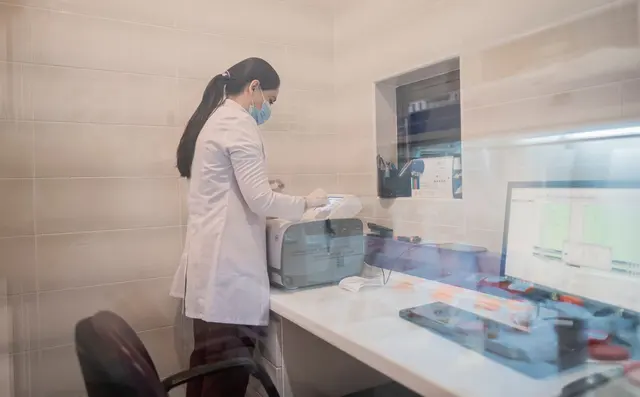
  3. A laboratory technician examining a sample on screen3

    Train & validate

    We build the model and test it against your real-world edge cases.

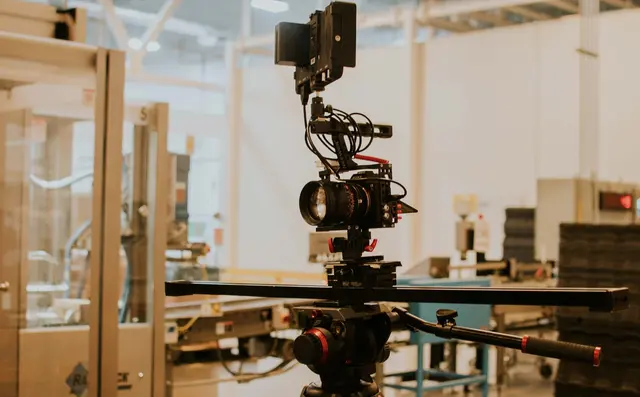
  4. A camera mounted above a work area4

    Deploy

    We put it on the line, the device or the cloud and monitor accuracy.

What you walk away with

Eyes on the things that count

FAQ

Questions, answered

Do we need a huge labelled dataset?

Not always. We can often start from a modest set and use techniques like augmentation and pre-trained models to get there with much less.

Will it work with our existing cameras?

Usually, yes. We design around your current hardware and conditions wherever possible, rather than asking you to rip and replace.

Can it run without the cloud?

Yes: we can deploy on the edge or on-device for speed and privacy when sending images to the cloud isn't practical or allowed.

What about privacy and people in the footage?

We handle imagery with GDPR in mind, minimising, anonymising or processing on-device wherever people are involved.

How accurate will it be?

We agree a target up front and test against your real edge cases, so accuracy is measured on your environment, not a clean demo dataset.

What cameras or hardware do we need?

It depends on the use case. Some applications work with standard CCTV; others need industrial line-scan or area cameras. We specify hardware requirements during the audit phase and can advise on procurement.

How accurate does the model need to be to be useful?

We set accuracy targets based on the cost of false positives versus false negatives in your specific process. For most quality-control use cases, 95%+ precision is achievable within the first sprint.

Does it work in real time?

Yes, when the use case requires it. We design for the required latency, from real-time edge inference to overnight batch processing. The right architecture is scoped up front.

Who can build a computer vision solution for our company in the Netherlands?

We are a boutique applied-AI firm based in the Utrecht region, and computer vision is core to what we do. If you want a small, senior team that works hands-on with clients across the Netherlands and the wider EU, remotely or on-site as needed, in English or Dutch, we are a good fit. We are specialists, not a large consultancy, so you talk directly to the people building your model.

How do we get started with a computer vision project, and what does it cost?

We start with a short paid discovery to scope what you need to detect and what accuracy is worth. Then we build at a fixed price: you own the source code and IP, senior engineers do the work, and EU AI Act and GDPR are handled by default. A proof-of-concept can start from a few thousand euros; a production build is larger and scoped after discovery. The Dutch WBSO scheme can offset R&D cost.

Scope

What is included, and what is not

So you can price the gap before a call rather than after one.

In scope

  • A model tested on your real conditions. Your cameras, your lighting, your angles and your worst day, not a clean public dataset.
  • The annotation set and the guidelines. Including the edge cases your people argued about, because that disagreement is the hard part of the problem.
  • Deployment to where the images are. On the line, at the gate or in the cloud, with the latency the process actually allows.
  • The code, models and prompts. In your repository, under your licence, with the documentation. You can hand the whole thing to another supplier and have them continue.

Not in scope

  • Cameras, mounts and lighting. We specify what the model needs and work with your installer. Buying and hanging the hardware is not ours, and pretending otherwise slows the project.
  • Third-party licences and usage costs. Model and API usage, and any SaaS the solution calls, are billed to you directly so you see the real running cost. We set a ceiling and an alert rather than an estimate.
What you can verify
One real engagement

AI Crop-Quality Detection & Workforce Allocation

What we found. Across thousands of hectares and a 10,000-strong workforce, quality and plant-protection decisions relied on manual spot-checks and experience. Effort and chemicals were spread too thinly to be efficient, and early pest or disease signs were easy to miss until they spread.

€800K → €225KAnnual plant-protection cost
+14%Quality of tea leaves harvested

Real result from a Crux Digits engagement; client name withheld pending permission.

Read the full case study →

Have cameras or visual data going to waste?

Tell us what you'd like to detect or inspect: we'll tell you what's feasible, in a free consultation.

Book a free consultation →