Why the Dutch energy system got harder to run, and where AI earns its place
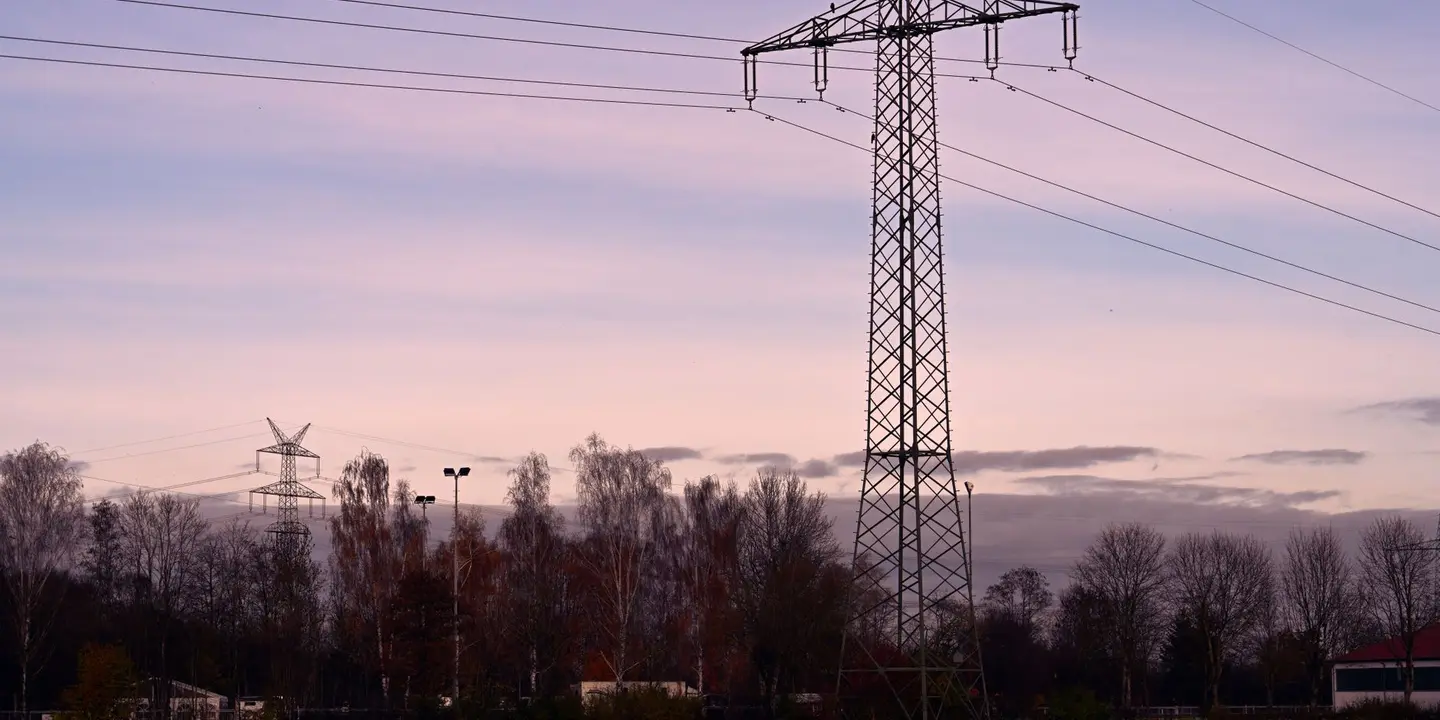
A decade ago a Dutch grid operator could forecast tomorrow with a calendar and a weather report. That world is gone. Rooftop solar now pushes power back up the low-voltage network on a sunny Sunday, heat pumps and EV chargers pile demand onto feeders that were sized for a different era, and dynamic tariffs nudge thousands of households to shift load in ways no static model anticipated. The result is a system that is far more variable, far more bidirectional, and increasingly bumping into the hard limit everyone in the sector now lives with: netcongestie, grid congestion, with connection queues stretching across large parts of the country.
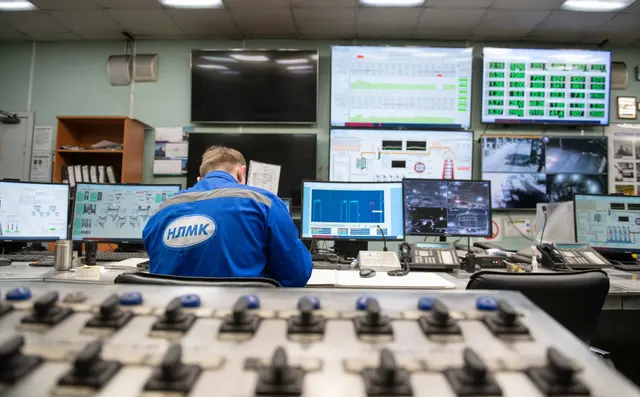
None of that is a data problem. Smart meters report at fifteen-minute intervals, SCADA and EMS systems stream substation telemetry, weather feeds and EPEX day-ahead prices arrive continuously, and asset sensors log the condition of every transformer and turbine. The problem is that this firehose sits in historians and dashboards that no human can watch in real time, and the patterns that matter: the feeder edging toward its thermal limit, the transformer whose oil temperature climbs a fraction each peak, the forecast that is quietly drifting off, are too subtle and too constant to track by eye. That is exactly the work machine learning does well, and it is why AI for energy and utilities in the Netherlands should start with the operational losses already visible in your own numbers, not with a technology wish list.
Load and demand forecasting that you can actually balance against
Forecasting is the foundation everything else in energiesector AI stands on, because almost every decision an energy business makes is a bet on a number it does not yet know: how much load arrives at 18:00, how much your wind farm generates overnight, what the imbalance price does in the next half hour. A model trained on your own history learns the real drivers: temperature and irradiance, the day-of-week and holiday rhythm, the slow creep of electrification on a given feeder, and the local quirks a generic national curve always misses.
The business shift is concrete. Better demand forecasting means you commit less expensive balancing energy, you cut your exposure to imbalance settlement, and you stop sizing reserves against your worst guess. As a rough sense of scale, credible industry benchmarks put short-term load-forecast error (MAPE) for a well-run utility in the low single digits, and energy traders treat each percentage point of accuracy as money: fewer costly corrections in the imbalance market, sharper day-ahead bids, tighter scheduling. We never quote a number we have not earned: we benchmark a new model against your current forecast on your own data and report honestly, and if it does not beat what you do today, we say so.
What changes operationally once the forecast is trustworthy:
- Tighter grid balancing. Operators dispatch and procure against a forecast that holds up, instead of padding reserves to cover a model they do not trust.
- Lower imbalance cost. Programme-responsible parties and suppliers reduce the gap between schedule and reality: the gap they pay for every quarter-hour.
- Confident capacity planning. Network planners see where electrification and solar will bite first, so reinforcement money goes where the congestion actually is.
- An asset you own. The model keeps learning as conditions shift, and because we build for ownership it stays yours, not a vendor black box you rent forever.
This kind of time-series modelling is the heart of our machine learning service, and getting the meter, weather and market feeds joined cleanly is the data engineering work that makes or breaks it.
Predictive maintenance for the assets you cannot afford to lose
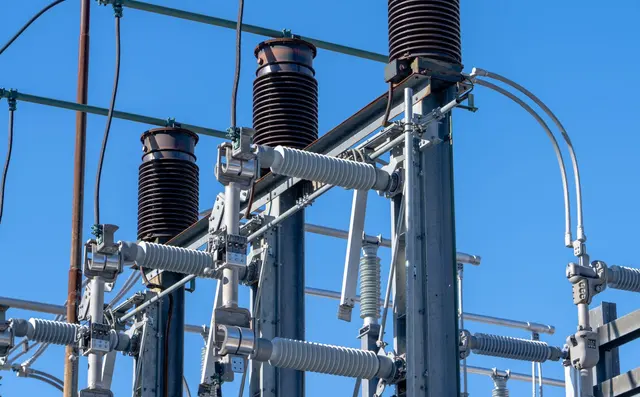
Grid and generation assets fail expensively and inconveniently. A distribution transformer that goes down takes a neighbourhood with it; an offshore turbine gearbox that seizes means a vessel, a crane and a long weather window before anyone can even reach it. Predictive maintenance for utilities reads the early signs the same way a good engineer would, only continuously and at scale: a model learns the healthy operating signature of an asset from its own sensor history (the thermal profile of a transformer under load, the vibration spectrum of a turbine, the dissolved-gas trend in insulating oil) and raises a flag when live readings drift in a way that historically preceded a fault.
The shift is away from two bad extremes. Run-to-failure means outages, collateral damage and emergency call-outs at the worst possible moment. Fixed-interval servicing means sending a crew to a substation on a calendar while the asset that is actually degrading sits untouched. A condition-based approach puts maintenance where the asset genuinely needs it: fewer unplanned outages, longer effective asset life because you stop running healthy equipment to destruction and stop replacing parts that had years left, and crucially, work scheduled into a planned window instead of a 2 a.m. scramble. For a worked example of failure-signature learning on industrial equipment, see our predictive maintenance case study; the same method extends to transformers, switchgear, turbines, pumps and any asset that logs its own behaviour. The engineering sits in our computer vision work too, where drone and inspection imagery flags corrosion, vegetation encroachment and damaged insulators across kilometres of line.
Grid optimisation, smart metering and the path to energietransitie
Grid optimisation is where forecasting and asset intelligence pay off together. Once you can predict load, generation and price, you can make the dispatch, storage and curtailment decisions that keep a congested network inside its limits, charging a battery when prices and solar are favourable and discharging into the evening peak, steering flexible load away from a feeder that is about to breach its thermal rating, and squeezing more capacity out of copper that is already in the ground. In a country where new grid connections can wait years, getting more from the existing network is not a nice-to-have; it is often the only option a business actually has.
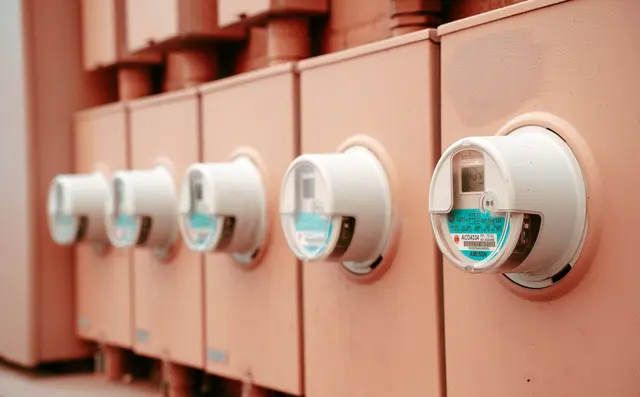
Smart metering is the raw material that makes this possible, but most of its value goes unused. Millions of interval readings can do far more than produce a bill. The same data, modelled well, segments consumption patterns, flags meters whose readings have gone implausible, and surfaces non-technical losses (the signature of energy theft or a faulty install) that a manual audit would never find at scale. On the customer side, it powers genuinely useful insight: a household or a business that finally understands its own load shape, and grounded assistants that answer billing and supply questions without escalating to a human. Those customer-facing assistants are built on our generative AI and LLM optimisation work, kept factual and tied to your tariff and contract data rather than left to improvise.
All of this is the practical machinery of the energietransitie. The transition is not an abstraction to a grid operator or supplier: it is more solar to integrate, more EVs to charge, more heat pumps to feed and a network that has to absorb it without falling over. AI does not replace the copper and the steel; it lets you run what you have far closer to its real limits, safely, with eyes on every asset and a forecast you can plan against.
Built for the Dutch market: critical-infrastructure security and the EU AI Act
Crux Digits is a boutique, senior-led AI consultancy in Nieuwegein, in the province of Utrecht, serving the Utrecht region and energy companies, network operators and utilities across the Netherlands and Europe. We are a deliberate alternative to two things the sector knows well: the large enterprise consultancies whose day rates and ramp-up rarely fit a focused operational problem, and the web agencies that recently rebranded around AI without ever shipping a model into production. We are the AI engineering partner (not a marketing shop) and on our projects senior people stay on the work from audit to deployment, so you end up owning the solution.
Energy is critical infrastructure, and we treat it that way. Grid and asset data can be deployed on-premise where it cannot leave your environment, and we design with the EU AI Act and GDPR/AVG in view from day one, which matters here, because smart-meter data is personal data and several grid-control use cases sit in higher-risk territory under the Act. Knowing how each system is classified and documented from the start protects you from rework and exposure later; retrofitting compliance after the fact is always the expensive way to do it.
Across 13 delivered case studies (spanning forecasting, predictive maintenance, computer vision, NLP and more) the pattern that earns trust with Dutch organisations is the same: prove value on a real use case quickly, keep the scope honest, and hand over something the client genuinely owns. Pricing is transparent and fixed-step, excluding VAT: an AI Audit and Strategy at EUR 2,500 to map the costliest losses and the data you already have, a Production-ready MVP at EUR 20,000 to prove the model on your data, and a production launch from EUR 50,000 to deploy and integrate it. You can see the full breakdown on our pricing page, and you always know the next step and its cost before you commit.
Where to start on your network
The fastest route to value is rarely the most ambitious use case, it is the loss with the biggest, clearest number against it. If imbalance cost or balancing energy dominates your operating spend, start with forecasting. If unplanned outages and emergency call-outs are the recurring pain, start with predictive maintenance. If congestion is throttling what you can connect or dispatch, start with grid optimisation. The audit exists precisely to make that call on evidence rather than enthusiasm. A typical engagement moves from an AI audit and strategy session (where we map your meters, sensors, SCADA and market feeds against the costliest problems) to a focused proof of concept, and only then to a production deployment wired into the systems your operators already rely on. If you have a forecasting, outage or asset-health problem with a real cost attached, that is the conversation worth having: reach Tom Joseph and the team at info@cruxdigits.nl or +31 6 44384676, and see how we work on our about page.