What AI actually changes on a Dutch logistics P&L
Fuel, drivers and empty kilometres are the three line items that decide whether a transport business makes money this quarter. None of them respond to a slick dashboard. They move when the planning underneath gets better: when the truck that used to run a 9% empty backhaul runs a 4% one, when the picker walks 30% less per order, when the demand plan stops triggering a Friday-afternoon rush order at premium freight rates. That is the layer where AI for logistics in the Netherlands earns its keep, and it is the layer most software never touches because it only digitises the plan instead of improving it.
Diesel in the Netherlands sits among the most heavily taxed in the EU, so every avoidable kilometre is more expensive here than across the border. Route optimisation that consistently trims even 6–12% of driven distance (a realistic industry-benchmark range once time windows, capacity and driver hours are modelled honestly) translates straight into litres of fuel, fewer toll passages and more drops per shift from the same fleet. Multiply that across a year and it is the difference between needing a fourteenth truck and squeezing more out of thirteen.
We treat the economics as the spec. Before we model anything, we ask which decision is leaking money (the route, the forecast, the slotting, the maintenance call) and we size what a 5% or 10% improvement is worth to you in euros. If the number is small, we say so. That honesty is the point of a senior-led AI consulting partner in the Netherlands rather than a vendor selling a platform you have to justify afterwards.
The Dutch logistics reality the model has to respect
What Dutch operators search for as AI logistiek is rarely a generic algorithm, it is a model that survives the specifics of operating from a country that is Europe's freight crossroads, and generic optimisation engines fall apart on exactly those specifics. The A2, A12, A15 and A16 corridors clog at predictable hours; a model that ignores time-of-day congestion plans routes that look great on paper and arrive late in practice. Rotterdam and the Brabant distribution belt feed a network where a single missed time window at a retail DC can mean a rejected delivery and a wasted round trip.
Then there is the structural driver shortage. When you cannot simply add capacity, the only lever left is using the hours you already have more intelligently: tighter route sequencing, fewer deadhead legs, better matching of loads to available shifts. AI is well suited to this because it weighs hundreds of constraints at once and finds plans a dispatcher under pressure at 6 a.m. cannot compute by hand.
- Customs and cross-border paperwork. Post-Brexit GB lanes and non-EU shipments generate documentation that swallows back-office hours. NLP and document-extraction models read CMR waybills, commercial invoices and customs declarations, flag mismatches before they cause a hold, and cut manual keying: the kind of work shown in our LLM optimisation and machine learning services.
- Cold chain and conditioned freight. For pharma, fresh produce and food, the risk is a temperature excursion you only notice after the load is ruined. The hard part is telling a genuine excursion apart from normal sensor noise, early enough to act: exactly the problem in our cold-chain monitoring case study.
- Multimodal and last-mile mix. Barge, rail and road choices, plus dense urban delivery in cities tightening their low-emission rules, make the planning surface far larger than a simple van-routing problem.
Forecasting that protects revenue, not just inventory
From gut feel to a defensible plan
Most demand planning in the Dutch MKB still runs on a spreadsheet, a moving average and the planner's instinct. That works until a promotion, a weather swing or a supplier delay breaks the pattern, and then you are either sitting on stock that ties up cash or stocking out and handing the order to a competitor. A proper demand forecasting model learns the seasonality, the promotional lift, the day-of-week and the lead-time variability in your own history, and produces a number you can staff and buy against.
The outcome that matters is not "better accuracy" in the abstract. It is fewer stockouts on your A-items, less obsolete inventory written off, smoother labour planning so you are not paying weekend overtime to recover from a Monday surprise, and fewer panic shipments at spot freight rates. In our demand forecasting and production planning case study for a large footwear manufacturer, the goal was precisely this: turn demand signals into a production plan, smooth changeover losses and defend market position. Client details stay confidential, but the shape of the problem is universal across supply chain AI.
Capacity and ETAs as a forecasting problem too
Forecasting is not only about stock. The same machinery predicts inbound volumes so a warehouse can roster the right number of pickers, anticipates which lanes will be tight next week, and powers ETA models that give customers an arrival window they can trust. A reliable ETA is quietly one of the highest-value outputs in transport: it cuts "where is my order" calls, lets receiving docks plan, and turns on-time delivery from a hope into a managed metric.
Warehouse, fleet and the data underneath it all
Inside the four walls
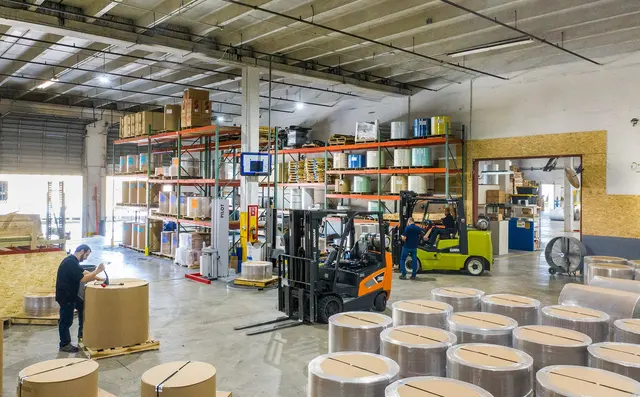
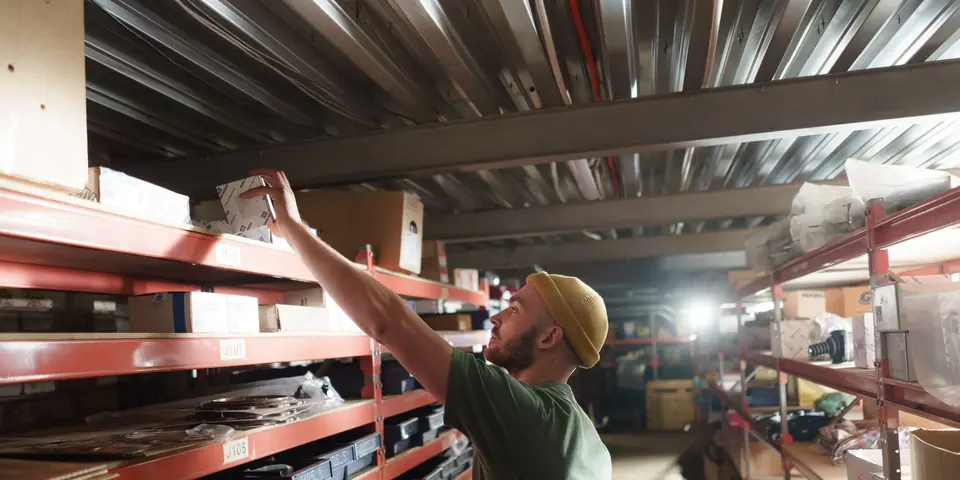
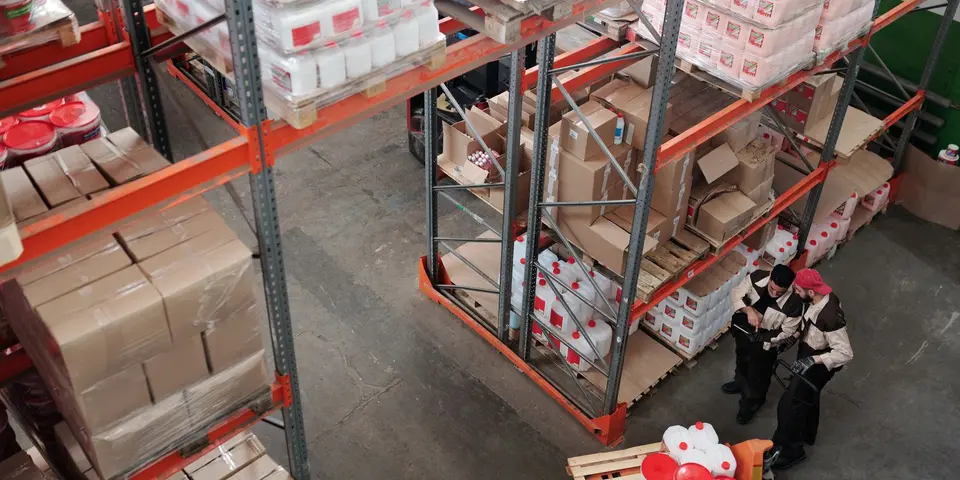
Warehouse automation does not have to mean a robotics overhaul. The fastest returns usually come from smarter software decisions: slotting fast-movers near dispatch, batching picks so a walker covers fewer metres, and forecasting labour so the shift matches the volume. Shave travel time per pick and throughput rises without a single new conveyor. For operators ready to go further, computer vision reads pallet labels, verifies loads, counts stock and catches damage, accuracy gains that show up directly in fewer mis-ships and fewer customer claims.
Keeping the fleet on the road
An unplanned breakdown does not just cost a repair; it strands a load, blows a delivery window and pulls a replacement vehicle off another job. Predictive maintenance models read telematics and engine data to flag the component drifting toward failure, so the truck comes in on a planned slot instead of dying on the A2. The measurable wins are less downtime, fewer roadside recoveries, and maintenance spend shifted from emergency to scheduled, where it is far less expensive.
Why most of this starts with data engineering
Here is the part the brochures skip: none of these models work on messy data. TMS, WMS, telematics, ERP and order systems rarely speak to each other cleanly, and a forecast or a route plan is only as good as the history feeding it. A large share of any honest logistics AI project is data engineering, joining those sources, cleaning them and building the pipeline that keeps fresh data flowing once the model is live. We are upfront about this because pretending otherwise is how AI projects quietly fail six months in.
Compliance, ownership and how Crux Digits is different
EU AI Act and AVG, built in from day one
Logistics AI touches data that regulators care about: driver location and hours, ANPR camera feeds in low-emission zones, customer addresses, and decisions that affect people's work. Under the EU AI Act some of these use cases carry real obligations, and the AVG/GDPR governs the personal data throughout. We design for this from the start: data minimisation, clear retention, documented decision logic and a human in the loop where it belongs. Compliance-first is not a brake on the project; it is what makes a model you can actually deploy and defend.
Crux Digits is a boutique, senior-led AI consultancy founded in 2022, based at Vlierhoeve 100 in Nieuwegein in the province of Utrecht, serving the Utrecht region and the whole of the Netherlands and Europe. We sit deliberately between two options that fail the typical Dutch transport SME. The big enterprise consultancies bill heavily, staff your project with juniors and leave you dependent. The weekend-rebranded "AI" web agencies cannot build a production model that survives contact with real freight data. We are the AI engineering partner in the middle: senior people stay on your project from audit to launch, and you end up owning the solution outright: code, model and pipeline.
The commercial path is transparent and fixed-step, all prices excluding VAT. An AI Audit & Strategy at EUR 2,500 pinpoints where the money actually leaks and whether AI is the right tool. A Production-ready MVP at EUR 20,000 puts a working model on your own data so you can judge it on results, not slides. Production launch starts from EUR 50,000, with day-rate guidance around EUR 150 per hour. You can see the full breakdown on our pricing page, and the breadth of work behind it across 13 delivered case studies spanning forecasting, computer vision, NLP and predictive maintenance.
Where to start
If kilometres, fuel, on-time delivery or stockouts are the numbers keeping you up, those are exactly the numbers we like to attack first, because they are measurable, and AI moves them. The honest route is a short conversation about where cost or delay creeps into your operation, followed by an audit that puts a euro figure on the opportunity before anyone writes a model. Explore our wider AI automation work or get in touch through the team, and we will map a realistic path from a single use case to AI running live in your operation.
Logistics sub-sectors we serve
Logistics is not one business, a 3PL, a freight forwarder and a port terminal each run different operations and need different AI. We build for each:
- AI for 3PL providers: cost-per-order, SLA adherence and faster client onboarding.
- AI for freight forwarders, quoting, customs documentation and shipment-visibility assistants.
- AI for port logistics, terminal and Port of Rotterdam operations, dwell time and ETA accuracy.
- AI for warehousing operators, slotting, pick paths, inventory accuracy and computer-vision receiving.
- AI for e-commerce fulfilment, order fulfilment, returns automation and peak readiness.
- AI for transport management software, embedding AI copilots and agents into TMS products.
In or shipping through Rotterdam? See our dedicated logistics AI consultant in Rotterdam page for the Port of Rotterdam and Rijnmond region.