What AI in de bouw actually costs you to ignore
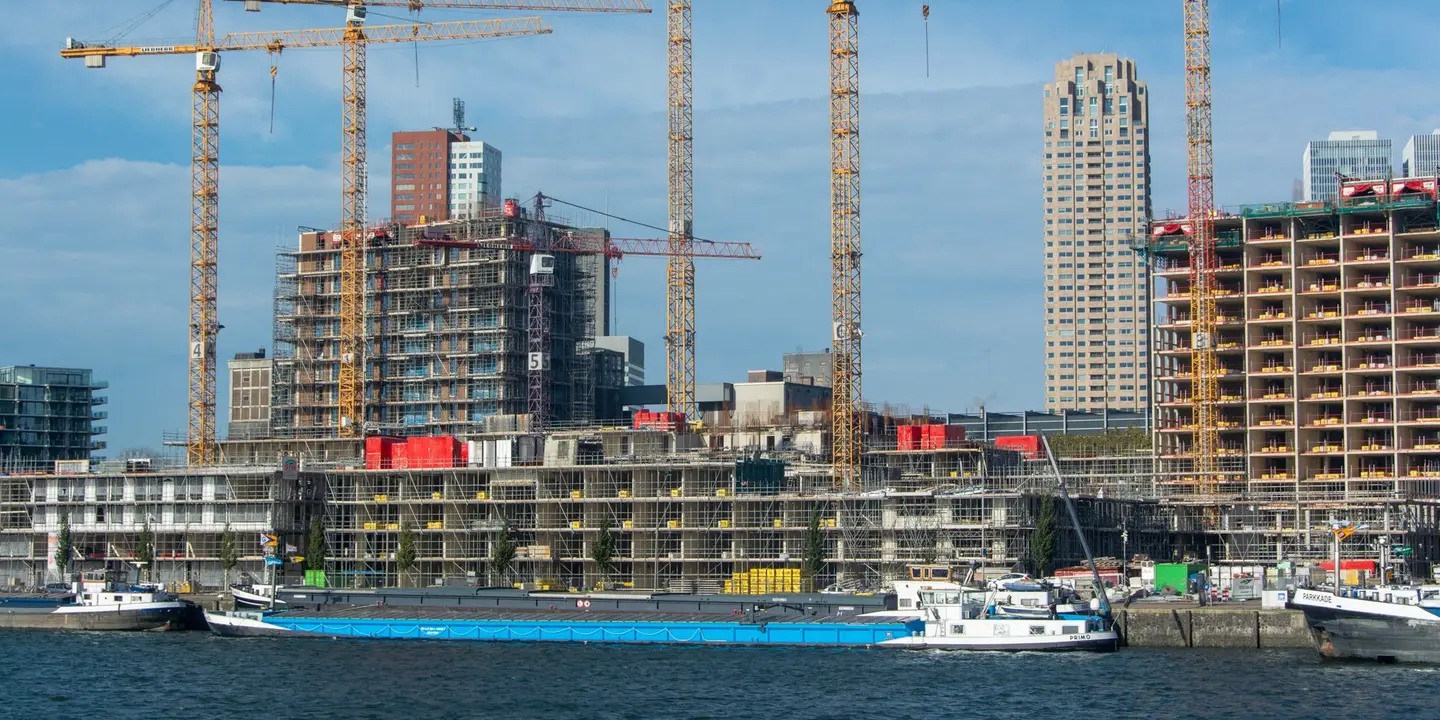
On a Dutch construction project, the money rarely leaks in one big visible place. It drains in the gaps: a tender re-priced three times because nobody trusts the first quantity takeoff, a crane sitting idle for a morning while a part is sourced, a stair core poured to the wrong tolerance and chipped out two weeks later. None of these show up as a line item called "waste." Added together across a year of projects, they are the difference between a healthy margin and a job you wish you had never bid.
That is the lens we bring to AI for construction in the Netherlands. The interesting question is never "what can the model do", it is which of these recurring leaks is costing your bouwsector business the most, and whether your own data is good enough to close it. The four outcomes worth measuring are blunt: safety incidents, schedule slippage, rework, and equipment downtime. Everything below maps back to one of those.
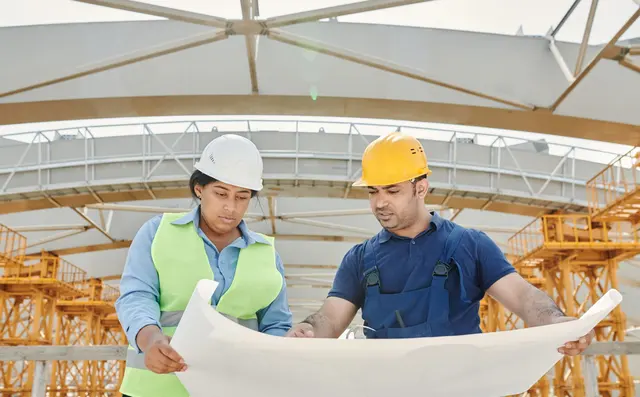
A safety briefing at 07:00 sets the intention for the day. It does not stop someone walking into an exclusion zone behind a reversing dumper at 14:30, or a subcontractor pulling off a harness because it is slowing them down. Site safety computer vision closes that gap by turning the cameras you already have into a continuous observer, not to police every worker, but to catch the specific patterns that precede the incidents your insurer and the Arbeidsinspectie care about.
In practice the model is tuned to a short, agreed list: missing helmets or hi-vis in active zones, people on foot inside a machine's swing radius, an open edge without barrier, a ladder used where access equipment was specified. When one of those is detected, the value is in the response time, a supervisor gets a flag in seconds instead of finding out at the incident report. The realistic industry pattern is a steady fall in near-misses well before lost-time incidents move, because you are now acting on the leading signal rather than the lagging one.
Two things matter in a Dutch and EU context. First, this is high-stakes processing of people on site, so EU AI Act and AVG/GDPR sit in the design from day one: edge inference where possible so footage never leaves the site, faces blurred or never stored, retention limited to what an incident review needs, and a clear lawful basis documented before a single camera is pointed. We build the data-protection assessment alongside the model, not as an afterthought. Second, "new cameras" is usually a myth, most sites already have enough coverage; the work is in the model, not the hardware. If you want the underlying capability rather than the construction-specific framing, our computer vision service page goes deeper on detection accuracy and deployment.
Planning optimisation: attacking schedule slippage before it compounds
Schedule slippage is rarely caused by the delay everyone talks about. It is caused by the second-order effects: the trade that cannot start because the one before it ran two days over, the rented equipment that now overlaps the wrong week, the penalty clause that quietly becomes reachable. By the time a slip is visible on the planning board, the recovery options have already narrowed and got more expensive.
Planning optimisation works on two fronts. The first is detection: comparing actual progress against the baseline programme early and honestly, so a slip surfaces in days rather than at the next site meeting. We do this by reading what is genuinely happening on site (progress photos, delivery logs, hours booked) and matching it against the plan, instead of waiting for a hand-updated percentage that is always optimistic. The second is sequencing: when a slip does happen, models can test resequencing and resource options far faster than a planner working by hand, surfacing the few moves that actually protect the critical path.
- Earlier warning. A two-week slip caught in week one is a resequencing exercise; caught in week six it is a claim. The whole point is to move the discovery date left.
- Honest progress. Site-grounded percent-complete instead of the number that always says 80% until it suddenly says 60%.
- Less expensive recovery. Acceleration and overtime are the most expensive way to make up time, the goal is to need them less often by reacting sooner.
This is forecasting applied to your programme, and it only works on your real history. A generic schedule tool has never seen how your crews actually perform in a Dutch winter or how long your typical permit cycle takes. We build on your data, the foundation for that is solid data engineering so the progress signals are clean enough to trust.
Estimating, rework and the role of BIM
Rework is the most demoralising cost in construction because it is pure loss, you pay twice for the same metre of wall and gain nothing. A large share of it traces back upstream: a quantity missed at takeoff, a clash between disciplines nobody caught, a spec interpreted differently by two trades. AI does not pour concrete, but it can sharpen the decisions that decide whether concrete gets poured correctly the first time.
Estimating and takeoff grounded in your won and lost jobs
An estimate built only on this drawing is a guess dressed up as a number. An estimate built on every comparable project you have actually delivered (what each element really cost, where the overruns clustered, which subs came in over) is a far better predictor. We train on your historical data and benchmark against your current estimating method, so accuracy is measured against your reality, not a vendor's brochure. The outcome is bids you can defend and a lower chance of the "we forgot to price that" conversation halfway through the job.
BIM as a source of truth the model can read
Where you work in BIM, the model has a structured, machine-readable description of the building: quantities, materials, relationships between elements. That makes automated takeoff far more reliable than parsing flat PDFs, and it lets the model reason about clashes and changes before they reach the site as rework. When a design revision lands, the relevant quantities and downstream impacts can be re-derived automatically instead of a junior re-counting by hand. For firms not yet fully on BIM, the same techniques extract structured data from drawings and specs, narrowing the re-keying that quietly introduces errors. The connective layer between BIM, your document systems and the models is engineering work, see our AI implementation approach for how that integration is built to last rather than demoed once.
Predictive maintenance: equipment downtime you can schedule instead of suffer
An excavator that fails mid-dig does not just cost the repair. It stops the trades waiting on that excavation, blows the day's plan, and turns a EUR 2,000 part into a five-figure delay. Predictive maintenance for equipment changes the question from "did it break" to "when is it likely to need attention", so you service it during a planned gap instead of in the middle of the critical path.
The approach uses the data the machine already produces: telematics, hours, fault codes, fuel and hydraulic patterns. Models learn the signature that precedes a failure and flag the asset while there is still time to act calmly. The same logic extends to the building you are handing over (HVAC, lifts, pumps) where a predicted fault is a scheduled maintenance visit rather than an emergency callout and an angry tenant. The honest framing matters: nobody can promise zero failures, but moving even a meaningful share of breakdowns from unplanned to planned is where the downtime savings live. This is one of the patterns we have delivered before, predictive maintenance sits among our 13 case studies, alongside the computer-vision concrete-crack and road-defect detection work that grew out of the same construction-sector experience.
Why a boutique partner fits the Dutch MKB better here
Construction is unforgiving of pilots that never ship. You do not need a forty-slide AI strategy from a large consultancy, and you certainly do not need a web agency that added "AI" to its homepage last quarter. You need senior people who understand both the model and the site, who stay on the project, and who leave you owning the solution rather than renting it forever.
That is what Crux Digits is built for. Founded in 2022 and based in Nieuwegein in the province of Utrecht, we are a boutique, senior-led AI engineering partner serving the Utrecht region, the whole Netherlands and Europe, bilingual in English and Dutch, and a natural fit for the MKB firms that make up most of the sector. The senior person who scopes your problem is the same one who builds it.
- AI Audit & Strategy. EUR 2,500. We find the costliest leak across safety, schedule, rework and downtime, and confirm whether your data can support a fix. No fix is promised before the data proves it can.
- Production-ready MVP. EUR 20,000. A working model on one real use case (your drawings, your site footage, your project history) so you judge value on evidence, not a demo.
- Production launch: from EUR 50,000. Integrated with your document systems, planning tools and cameras, with the EU AI Act and AVG obligations handled, and the solution in your hands.
Pricing is fixed-step and transparent (excl. VAT, with day-rate guidance around EUR 150/hour) so a construction CFO can budget it like any other line, the full breakdown is on our pricing page. If you are weighing whether AI belongs on your next project at all, that conversation is exactly what the AI Audit & Strategy step is for. Tell us where your projects lose time or money, and we will map the shortest path to a measurable result.