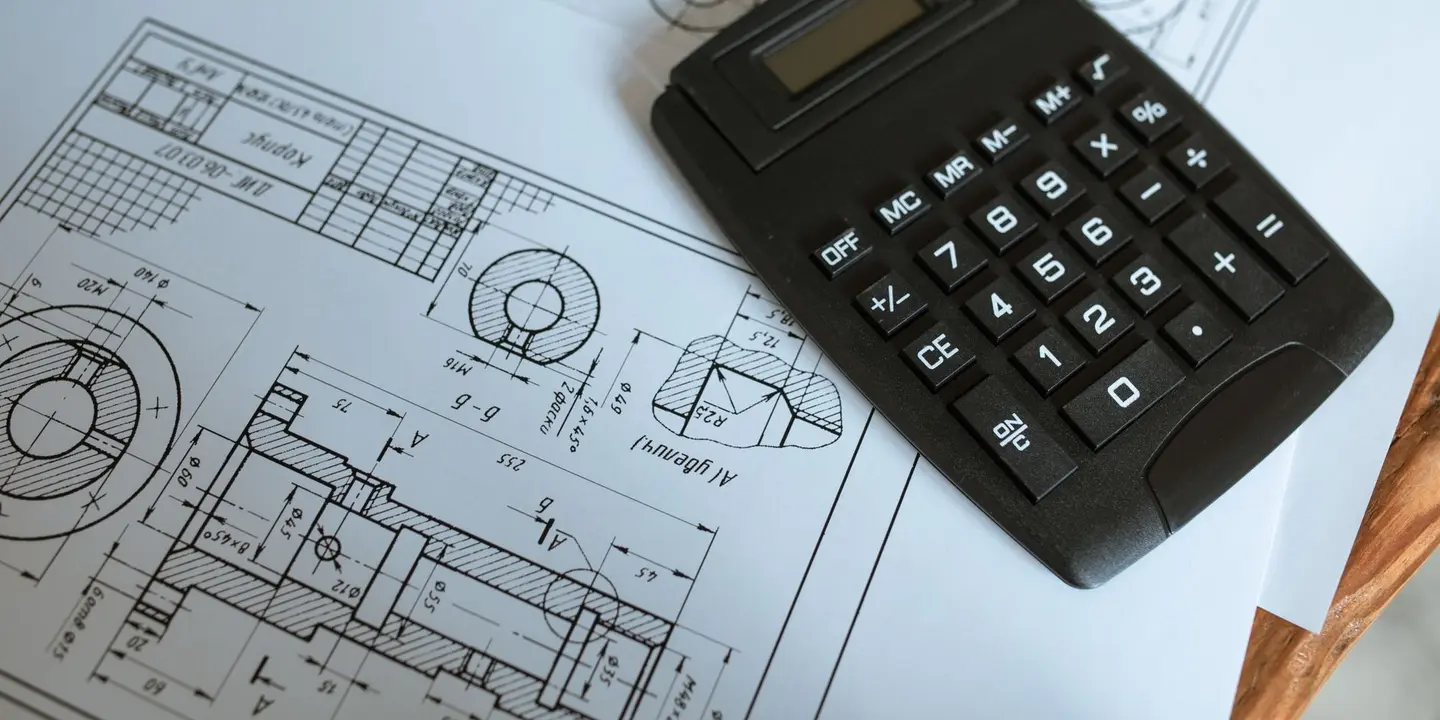
Can AI calculate a construction quote on its own?
It can produce a complete draft: take-off from drawings and specification, prices from your own unit rates and post-calculations, and the quote text. It should not send it. The estimator checks the flagged items, sets margin and risk and signs, which is also what the Wkb's quality burden expects of a builder.
Does AI take-off work on our drawings?
On PDF and DWG it reads dimensions and annotations; on IFC models it reads the objects directly, which is more reliable. The audit tests it on twenty of your own past projects before anything is built, so you see the accuracy on your drawings, not on a demo set.
Which calculation software does it work with?
The AI layer writes into the software your estimators already use, such as Ibis, Bouw7, KPD, Syntess Atrium or Admicom, and into your ERP or accounting package. Integration is scoped in the audit and is usually half the work.
What does AI estimating cost for a Dutch contractor?
At Crux Digits: a €2,500 audit, a €20,000 Production-ready MVP for one type of work, and production from €50,000 with integration and the estimator's review built in, all excl. VAT. Custom development of this kind usually qualifies for WBSO.
How much time does it save per quote?
That depends on how much of your estimating time is take-off and retyping rather than judgement, which is why the audit measures your hours per quote first. The honest claim is that the routine part of a quote, take-off, pricing and drafting, is where the hours go, and that part is what the system takes over.
Is the calculation explainable if a client or an insurer asks?
Yes. Every quantity traces to a drawing reference, every price to a unit rate or a quote, and every flag to a past project. That trace is part of the build, not an add-on, because under the Wkb a number nobody can explain is a liability.