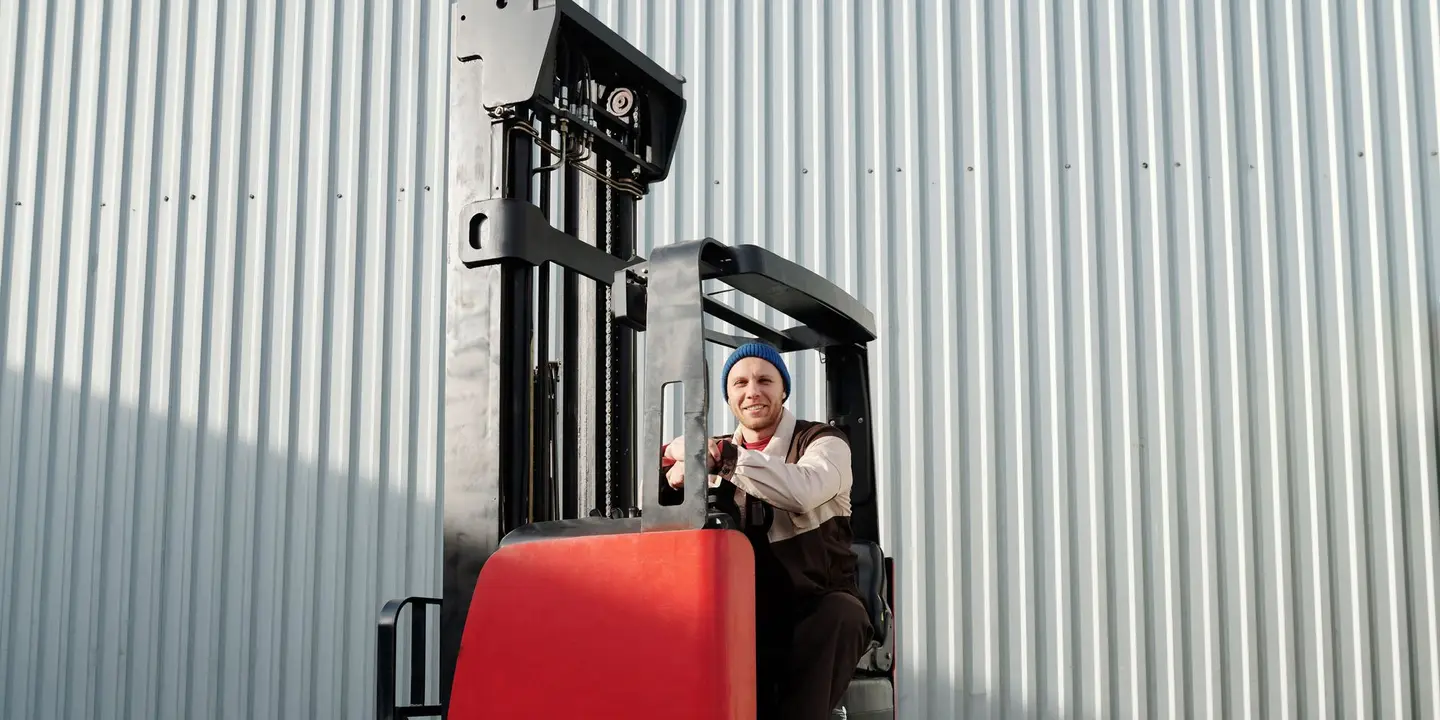
An AI assistant answers fault codes, inspection items and part numbers from the importer's workshop manuals, inspection checklists and parts catalogues. Technicians ask it on WhatsApp beside the truck; the parts counter and new staff use the same knowledge base.
A forklift that stops in a distribution centre blocks the aisle behind it. The technician on site needs the fault code, the right part for that serial number and the inspection items, and usually phones the service desk for them.
Last updated: 28 October 2026
An AI assistant for a forklift importer or dealer answers four groups from one set of documents. Fleet managers ask what a display warning means. Technicians ask for fault code checks, torque values and service intervals. The parts counter asks which part fits which serial number range. New service desk staff ask how things are done here. All get answers from the workshop manuals, parts catalogues, inspection checklists and datasheets you already have. Live stock, warranty claims and service planning need a custom integration. The document side is what SimplyBoost, our own product, does.
| Who asks | Typical question | Answered from |
|---|---|---|
| Customers and fleet managers | What does this display warning mean, and may the truck keep running? | Operator manual, fault code list |
| Dealers and sub-dealers | Which mast and battery options does this model offer, and what capacity remains at full height? | Datasheets, option lists, load charts |
| Technicians in the field or workshop | Hydraulic fault on a reach truck: what do I check first? | Workshop manual, fault code tables, service bulletins |
| The parts counter | Which seal kit fits the lift cylinder on this serial number? | Parts catalogue, exploded views, serial number ranges |
| New service desk and parts staff | How do we log a breakdown call, and what does the periodic inspection cover? | Internal procedures, inspection checklists, the same manuals |
A service technician at a customer site works with a fault code, a type plate and a serial number. Without an assistant, the next step is a call to the service desk or to the one colleague who knows that model. With an assistant on a WhatsApp Business number, the technician types the code and model and gets the checks from the workshop manual, the interval from the service schedule or the torque from the procedure. During a periodic inspection the same line gives the lift chain wear limit and how to measure chain elongation. Replies come in Dutch, French, German, Spanish or English.
The assistant answers from documents only; it does not read the truck controller or the service history. A repair beyond the manual or a warranty decision goes to the service desk in Zendesk, Freshdesk, Gorgias or Slack, with the conversation attached.
Forklift parts depend on model, build year and serial number range, and a mast or drive unit can change within one model run. That knowledge sits in parts catalogues and exploded views that only experienced counter staff read quickly. Upload them with a CSV linking models to serial number ranges, and the assistant answers which part number belongs to which serial number, with the figure and position from the exploded view.
Dealers ask the same questions in your signed-in dealer portal, where the assistant recognises them by verified email address. An order request goes to the parts team with the serial number and the conversation. Stock checks and placing the order need a link to the ERP or dealer management system: a custom build.
A new colleague at the service desk or parts counter needs months to learn the models, the fault codes and how your company logs a breakdown. Until then, every question goes to a senior colleague. An internal assistant answers from the same manuals and catalogues plus your own procedures: how a breakdown call is logged, which items an inspection covers, how a warranty request is prepared for the importer. A new counter colleague who needs a lift chain for a 2018 triplex mast finds the mast type in the serial number list and the chain in the exploded view, without walking to the workshop.
Each SimplyBoost account includes three AI agents: one for customers on the website, one for dealers and technicians in the portal or on WhatsApp, one for the internal team. The senior colleague keeps the difficult cases.
| Need | SimplyBoost, our own product, from documents | Custom Crux build, from live systems |
|---|---|---|
| Fault codes, procedures, service intervals | Answered from workshop manuals and service schedules | Only needed if answers must come from telematics or controller data |
| Parts identification | Answered from parts catalogues, exploded views and a serial number list | Stock and price from the ERP or dealer management system |
| Orders and warranty claims | Handed to your team with the conversation | Claim created in the warranty system, serial number checked in the registry |
| Service planning | Request collected and handed over | Slots read and booked in the service planning |
| Who owns what | The importer or dealer owns the documents and the account | Your IT partner keeps managing the systems; Crux builds the integration and hands over the code |
| Read more | SimplyBoost for forklift dealers | AI customer service for dealer networks: buy or build; AI audit €2,500, Production-ready MVP €20,000, production from €50,000, excl. VAT |
The same assistant works for other dealer and installer networks. Overview: AI assistant for dealer networks.
Heat pump brands · Solar and home battery brands · Robot mowers and garden machinery · Hot tubs, swim spas and saunas · Mobility scooters and powered wheelchairs · Trailer manufacturers and importers · Electric car importers · Microcar and scooter importers · E-bikes and speed pedelecs · Agricultural and groundcare machinery · Caravans, motorhomes and boats
Bring one workshop manual and one parts catalogue to a free consultation. We show how the assistant answers from them and which questions need a custom link.
Book a free consultation →